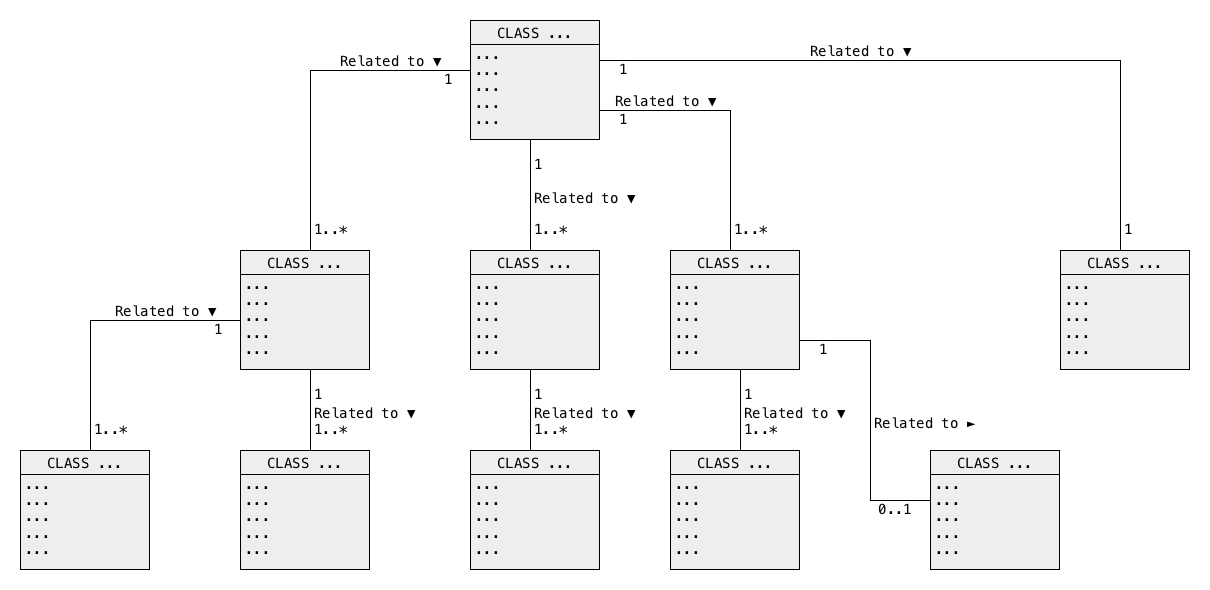
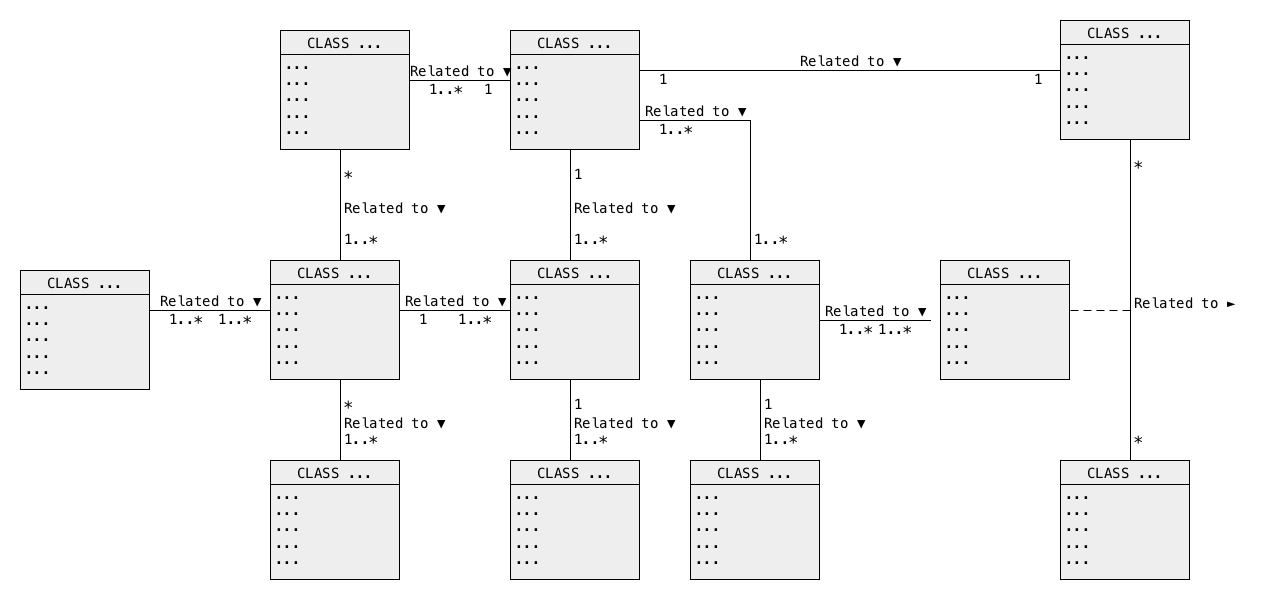
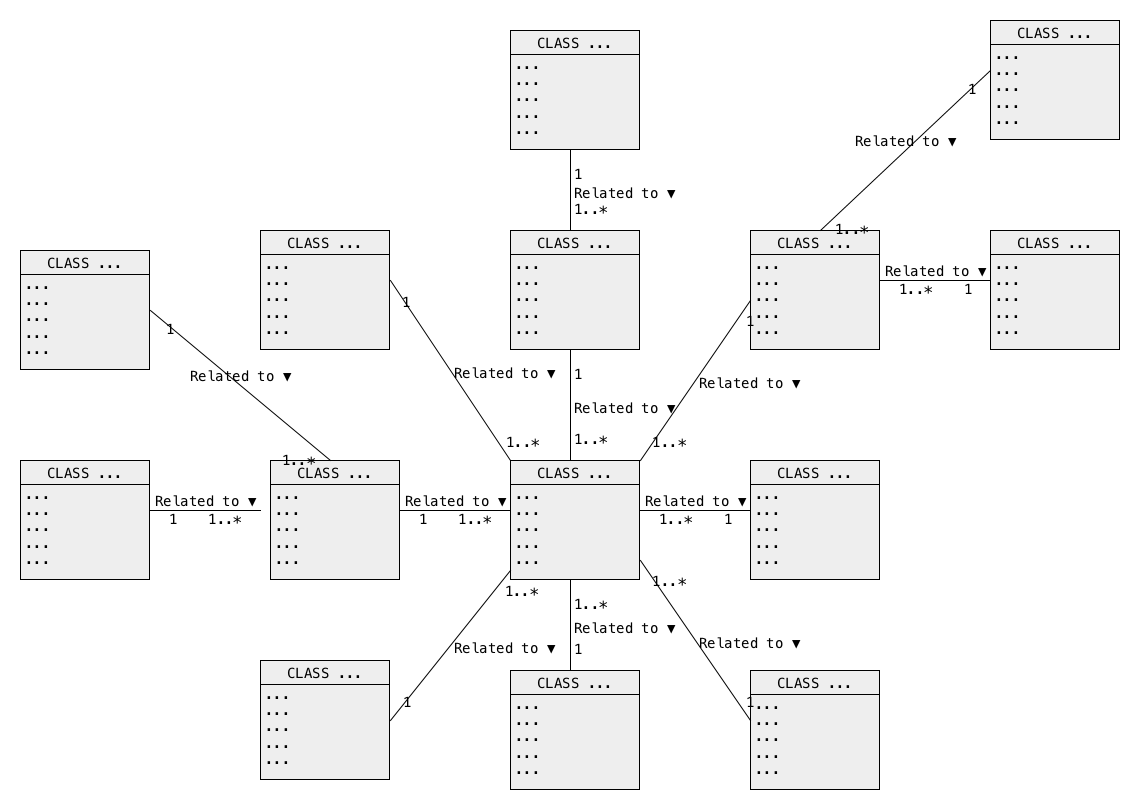
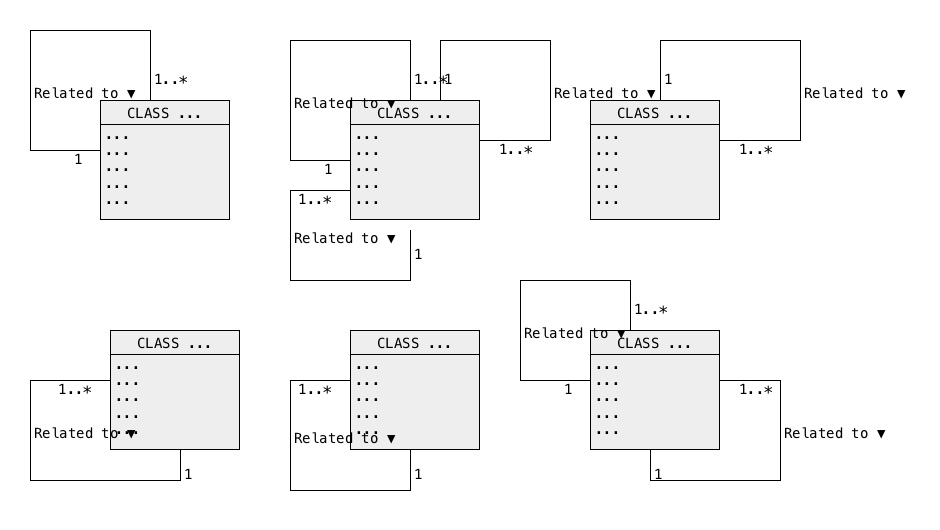
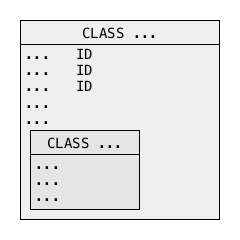
Depending on the multiplicities and structures of associations a conceptual schema may belong to one of the following categories of conceptual schemas
hierarchical schemas
network schemas
multidimensional schemas
graph schemas
key-value schemas
other schemas
Hierarchical schemas
A conceptual schema belongs to a category of hierarchical schemas if all classes of objects are linked with "one-to-many" or "one-to-one" associations only and such that each object class is at most one "many" side of association
Network schemas
A conceptual schema belongs to a category of network schemas if it is not hierarchical schema and all classes of objects are linked with "one-to-many" or "one-to-one" associations or "many-to-many" associations
Multimensional schemas
A conceptual schema belongs to a category of multidimensional schemas if it consists of star schemas only
A conceptual schema is a star schema if it consists of one central class of objects located on "many" side of the chains of "many-to-one"associations
Graph schemas
A conceptual schema belongs to a category of graph schemas if all association link the same class on both sides
Key-value schemas
A conceptual schema belongs to a category of key-value if there are no associations and each class of objects has a composite identifier and the values attributes can be composite
A wise choice of logical data model and implementation
To improve performance the classes of conceptual schemas can be implemented by the following logical models:
hierarchical schemas => JSON/BSON data model => NoSQL database systems
hierarchical schemas => XML data model => Native XML database systems
hierarchical schemas => Hybrid data model => Relational model with JSON/BSON, XML, and other complex values
network schemas => Relational data model => relational database systems
network schemas => Object-oriented data model => Native object-oriented database systems or object-oriented wrappers on top of relational database systems
multidimensional schemas => Data warehouses (either native data cubes or relational database systems)
graph schemas => Graph data model => Graph database systems
key-value schemas => Big Table (HBase) data model => HBase distributed database system
A wise choice of logical data model and implementation
To improve performance the classes of conceptual schemas can be implemented by the following logical models:
other schemas => Relational data model => relational database systems
other schemas => Hybrid data model => Relational model with JSON/BSON, XML, and other complex values
other schemas => JSON/BSON data model => NoSQL database systems
other schemas => Big Table (HBase) data model => HBase distributed database system