- Distributed database ? What is it ?
- Centralized database schema model
- Mainframe application architecture
- Client-server architecture
- Distributed client-server architecture
- Web based architecture
- Distributed Web based architecture
- Distributed database schema architecture
- Transparency
- Autonomy
- Advantages and disadvantages of DDBS
- Distributed database system in PostgreSQL
Distributed Relational Database Systems
Outline
Distributed database ? What is it ?
- Distributed database system (DDBS) is a collection of multiple logically related databases distributed over a computer network
- Distributed database management system (DDBMS) is a collection of database systems together with software providing a required set of operations on data and management features
- Homogeneous DDBS is a collection of identical database systems distributed over a computer network, e.g. a collection of Oracle database systems
- Heterogeneous DDBS is a collection of different database systems distributed over a computer network, e.g. a collection of Oracle + MySQL + DB/2 + MongoDB + XML native database systems + Excel spreadsheets + ... , systems
Distributed database ? What is it ?
- A sample organization of heterogeneous distributed database system

Distributed Relational Database Systems
Outline
- Distributed database ? What is it ?
- Centralized database schema model
- Mainframe application architecture
- Client-server architecture
- Distributed client-server architecture
- Web based architecture
- Distributed Web based architecture
- Distributed database schema architecture
- Transparency
- Autonomy
- Advantages and disadvantages of DDBS
- Distributed database system in PostgreSQL
Centralized database schema model
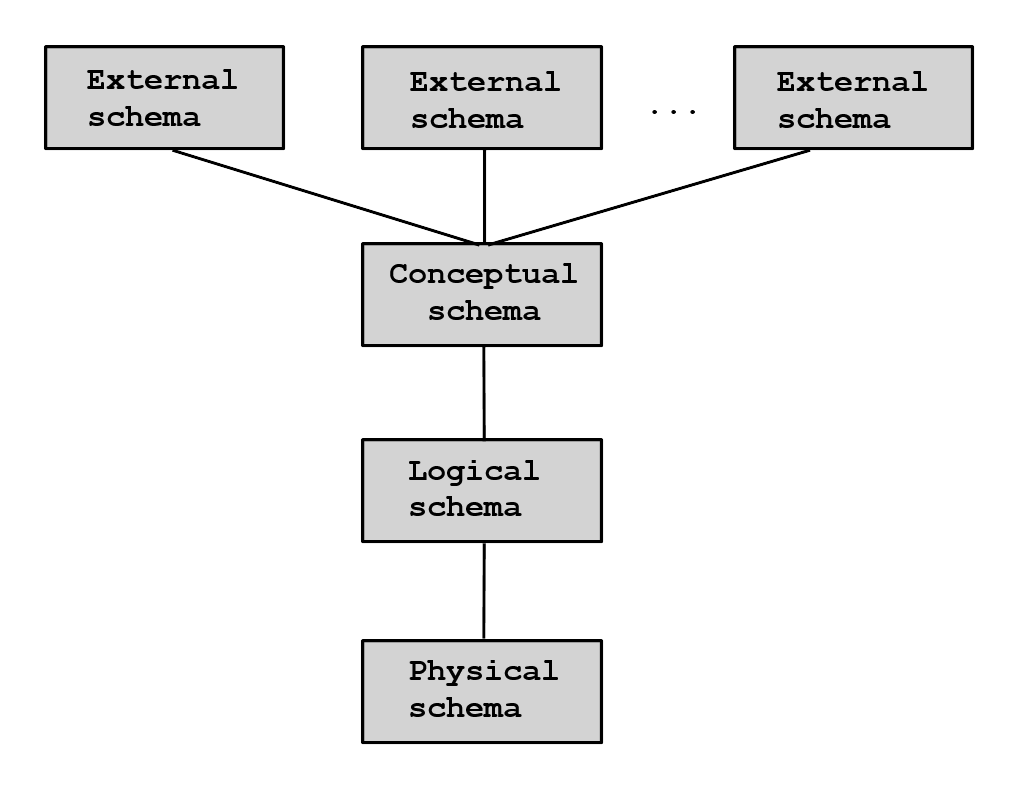
- In a centralized database schema model the users are provided their personal external schemas (views) of data
- The external schemas are integrated into a single conceptual schema later on transformed into a logical schema and implemented as a physical schema
Distributed Relational Database Systems
Outline
- Distributed database ? What is it ?
- Centralized database schema model
- Mainframe application architecture
- Client-server architecture
- Distributed client-server architecture
- Web based architecture
- Distributed Web based architecture
- Distributed database schema architecture
- Transparency
- Autonomy
- Advantages and disadvantages of DDBS
- Distributed database system in PostgreSQL
Mainframe application architecture
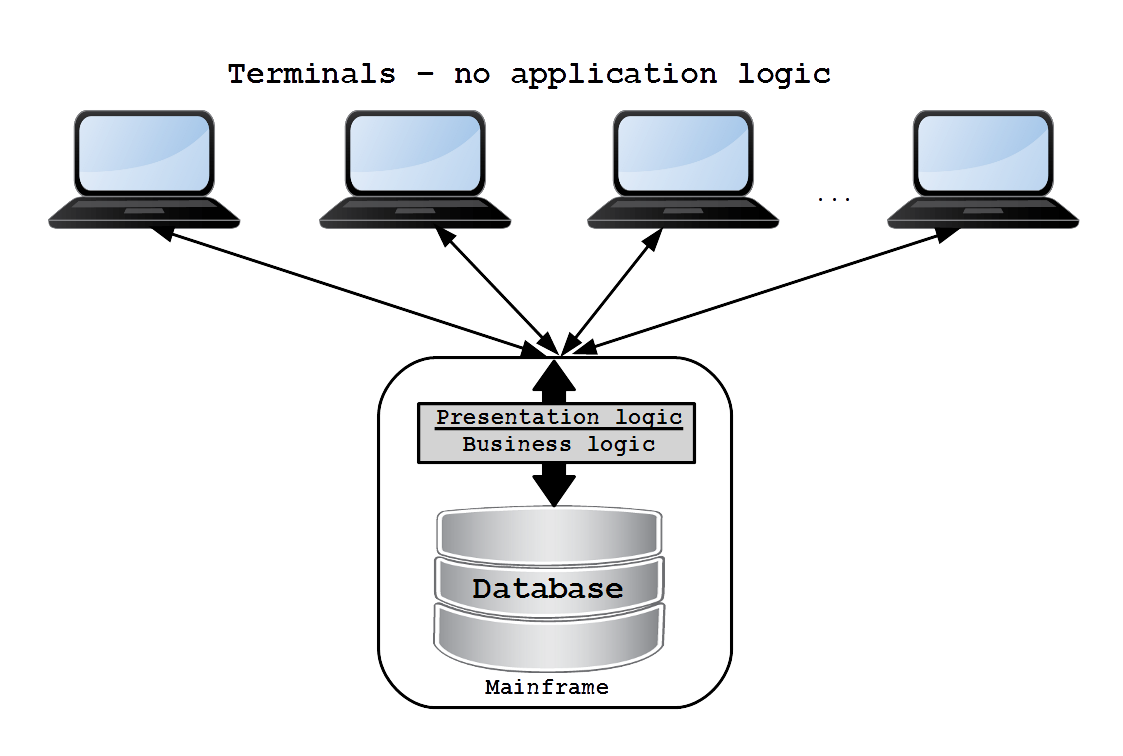
- In mainframe application architecture "dumb" terminals are connected to a single database server
Distributed Relational Database Systems
Outline
- Distributed database ? What is it ?
- Centralized database schema model
- Mainframe application architecture
- Client-server architecture
- Distributed client-server architecture
- Web based architecture
- Distributed Web based architecture
- Distributed database schema architecture
- Transparency
- Autonomy
- Advantages and disadvantages of DDBS
- Distributed database system in PostgreSQL
Client-server architecture
- In client-server architecture personal systems communicate with a single database server

Distributed Relational Database Systems
Outline
- Distributed database ? What is it ?
- Centralized database schema model
- Mainframe application architecture
- Client-server architecture
- Distributed client-server architecture
- Web based architecture
- Distributed Web based architecture
- Distributed database schema architecture
- Transparency
- Autonomy
- Advantages and disadvantages of DDBS
- Distributed database system in PostgreSQL
Distributed client-server architecture
- In distributed client-server architecture personal systems communicate with many database servers

Distributed Relational Database Systems
Outline
- Distributed database ? What is it ?
- Centralized database schema model
- Mainframe application architecture
- Client-server architecture
- Distributed client-server architecture
- Web based architecture
- Distributed Web based architecture
- Distributed database schema architecture
- Transparency
- Autonomy
- Advantages and disadvantages of DDBS
- Distributed database system in PostgreSQL
Web based architecture
- In Web based architecture personal systems communicate with the Web servers that communicate with a single database server

Distributed Relational Database Systems
Outline
- Distributed database ? What is it ?
- Centralized database schema model
- Mainframe application architecture
- Client-server architecture
- Distributed client-server architecture
- Web based architecture
- Distributed Web based architecture
- Distributed database schema architecture
- Transparency
- Autonomy
- Advantages and disadvantages of DDBS
- Distributed database system in PostgreSQL
Distributed Web based architecture
- In Distributed Web based architecture personal systems communicate with the Web servers that communicate with many database servers

Distributed Relational Database Systems
Outline
- Distributed database ? What is it ?
- Centralized database schema model
- Mainframe application architecture
- Client-server architecture
- Distributed client-server architecture
- Web based architecture
- Distributed Web based architecture
- Distributed database schema architecture
- Transparency
- Autonomy
- Advantages and disadvantages of DDBS
- Distributed database system in PostgreSQL
Distributed database schema architecture
- In distributed database schema architecture a global conceptual schema hides distribution from the users
- The users can see a distributed database system as a single monolithic database system

Distributed Relational Database Systems
Outline
- Distributed database ? What is it ?
- Centralized database schema model
- Mainframe application architecture
- Client-server architecture
- Distributed client-server architecture
- Web based architecture
- Distributed Web based architecture
- Distributed database schema architecture
- Transparency
- Autonomy
- Advantages and disadvantages of DDBS
- Distributed database system in PostgreSQL
Transparency
- Transparency means hiding information from end users
- Data organization (distribution or network) transparency means hiding network related information and data placement information; it is either location or naming transparency
- Naming transparency allows for global naming of data objects
- Location transparency allows the operations to be independent on the locations of data objects
- Replication transparency means that users are unaware of the existence of multiple copies of the same data objects
- Fragmentation transparency means that users are unaware of data fragmentation over many sites; it includes vertical and horizontal fragmentation
Transparency
- Design transparency means that users are unaware of how distributed database was designed
- Execution transparency means that users are unaware of how database transactions are processed
Distributed Relational Database Systems
Outline
- Distributed database ? What is it ?
- Centralized database schema model
- Mainframe application architecture
- Client-server architecture
- Distributed client-server architecture
- Web based architecture
- Distributed Web based architecture
- Distributed database schema architecture
- Transparency
- Autonomy
- Advantages and disadvantages of DDBS
- Distributed database system in PostgreSQL
Autonomy
- Autonomy determines a level of independence of individual nodes in distributed database system
- High degree autonomy is required for flexibility and customized maintenance of distributed database system
- Design autonomy means a level of independence of data model usage and transaction management technique between the nodes
- Communication autonomy means a level of independence to which a node can share information with other nodes
- Execution autonomy means a level of independence to which users act as they please
Distributed Relational Database Systems
Outline
- Distributed database ? What is it ?
- Centralized database schema model
- Mainframe application architecture
- Client-server architecture
- Distributed client-server architecture
- Web based architecture
- Distributed Web based architecture
- Distributed database schema architecture
- Transparency
- Autonomy
- Advantages and disadvantages of DDBS
- Distributed database system in PostgreSQL
Advantages and disadvantages of DDBS
- Higher level of reliability and availability
- Improved ease and flexibility of application development
- Improved performance
- Easier expansion
Advantages and disadvantages of DDBS
- Keeping track of data distribution
- Distributed query processing
- Distributed transaction management
- Replicated data management
- Distributed database recovery
- Security
- Distributed directory (catalog) management
Distributed Relational Database Systems
Outline
- Distributed database ? What is it ?
- Centralized database schema model
- Mainframe application architecture
- Client-server architecture
- Distributed client-server architecture
- Web based architecture
- Distributed Web based architecture
- Distributed database schema architecture
- Transparency
- Autonomy
- Advantages and disadvantages of DDBS
- Distributed database system in PostgreSQL
Distributed Database System PostgreSQL
- Implementation of distributed database system requires access with SQL to data located at a remote database system from outside a host database system
- SQL/Management of External Data (MED) allows for access to data located at an external database system through implementation of foreign data wrappers (FDW)
- A module postgres_fdw in PostgreSQL provides the foreign data wrapper postgres_fdw
- A module postgres_fdw replaces the older dblink module
Distributed Database System PostgreSQL
- A procedure to access to data located at an external/remote database with a module postgres_fdw consists of the following steps:
- install an extension postgres_fdw
- create a foreign server to determine a location of data stored in an external PostgreSQL database system
- create a user mapping, to identify the user/role that will be used on a foreign/remote server
- create the foreign tables to access the relational tables located on a foreign/remote server
Distributed Database System PostgreSQLn
- As an example, we consider a database that can be created through processing of the following CREATE TABLE statements
CREATE TABLE DEPARTMENT(
 name               VARCHAR(50)        NOT NULL,
 code               CHAR(5)            NOT NULL,
 total_staff_number DECIMAL(2)         NOT NULL,
 chair              VARCHAR(50)            NULL,
 budget             DECIMAL(9,1)       NOT NULL,
  CONSTRAINT dept_pkey PRIMARY KEY(name),
  CONSTRAINT dept_ckey1 UNIQUE(code),
  CONSTRAINT dept_ckey2 UNIQUE(chair),
  CONSTRAINT dept_check1 CHECK (total_staff_number BETWEEN 1 AND 50) );
CREATE TABLE COURSE(
 cnum               CHAR(7)           NOT NULL,
 title              VARCHAR(200)      NOT NULL,
 credits            DECIMAL(2)        NOT NULL,
 offered_by         VARCHAR(50)           NULL,
  CONSTRAINT course_pkey PRIMARY KEY(cnum),
  CONSTRAINT course_check1 CHECK (credits IN (6, 12)),
  CONSTRAINT course_fkey1 FOREIGN KEY(offered_by)
                          REFERENCES DEPARTMENT(name) ON DELETE CASCADE );
Distributed Database System PostgreSQL
- A user xyz007 creates the relational tables DEPARTMENT and COURSE on a database server db1teach.adeis.uow.edu.au
- A user xyz007 loads data into the relational tables DEPARTMENT and COURSE on a database server db1teach.adeis.uow.edu.au
- A user xyz007 creates the relational tables DEPARTMENT and COURSE on a database server db2teach.adeis.uow.edu.au
- A user xyz007 would like to copy information about a department Computer Science from a database server db1teach.adeis.uow.edu.au to a database server db2teach.adeis.uow.edu.au
- To do so a user xyz007 must create the foreign relational tables with the names REMOTE_DEPARTMENT and REMOTE_COURSE on a database server db1teach.adeis.uow.edu.au and to map such tables into the relational tables DEPARTMENT and COURSE on a database server db2teach.adeis.uow.edu.au
Distributed Database System PostgreSQL
- Then a user xyz007 can remotely operate on the relational tables DEPARTMENT and COURSE on a database server db2teach.adeis.uow.edu.au without connecting to the server
- The foreign relational tables REMOTE_DEPARTMENT and REMOTE_COURSE created on a database server db1teach.adeis.uow.edu.au represent the respective relational tables DEPARTMENT and COURSE on a database server db2teach.adeis.uow.edu.au
- If in a general case we would like to access a relational table R located on a database server we are not connected to then we must create a foreign relational table REMOTE_R on a database server we are connected to and we must map a table REMOTE_R into a table R on a database server we are not connected to
- A name of a foreign relational table is up to us but it must be different from the already existing relational tables or foreign relational tables
Distributed Database System PostgreSQL
- To create a foreign relational table a user xyz007 creates an extension postgres_fdw (note, that a privilege to create the extansion has been already granted to a user xyz007
CREATE EXTENSION postgres_fdw;
CREATE SERVER foreign_server FOREIGN DATA WRAPPER postgres_fdw
  OPTIONS (host 'db2teach.adeis.uow.edu.au', port '5432', dbname 'xyz007');
Distributed Database System PostgreSQL
- Next, a user xyz007 creates a user mapping with CREATE USER MAPPING statement to identify a user that will be used on the remote server
CREATE USER MAPPING FOR xyz007 SERVER foreign_server
  OPTIONS (user 'xyz007', password 'xyz007');
CREATE FOREIGN TABLE REMOTE_DEPARTMENT (
 name               VARCHAR(50)        NOT NULL,
 code               CHAR(5)            NOT NULL,
 total_staff_number DECIMAL(2)         NOT NULL,
 chair              VARCHAR(50)            NULL,
 budget             DECIMAL(9,1)       NOT NULL )
   SERVER foreign_server
   OPTIONS (schema_name 'public', table_name 'department');
Distributed Database System PostgreSQL
- Next, a user xyz007 creates a foreign relational table REMOTE COURSE with CREATE FOREIGN TABLE statement
CREATE FOREIGN TABLE REMOTE_COURSE(
 cnum               CHAR(7)           NOT NULL,
 title              VARCHAR(200)      NOT NULL,
 credits            DECIMAL(2)        NOT NULL,
 offered_by         VARCHAR(50)           NULL )
   SERVER foreign_server
   OPTIONS (schema_name 'public', table_name 'course');
INSERT INTO REMOTE_DEPARTMENT(
  SELECT *
  FROM DEPARTMENT
  WHERE name = 'Computer Science');
Distributed Database System PostgreSQL
- Next, a user xyz007 copies information about the courses offered by Computer Science department from COURSE table to REMOTE_COURSE table
INSERT INTO REMOTE_COURSE(
  SELECT *
  FROM COURSE
  WHERE offered_by = 'Computer Science');
References
- T. Connoly, C. Begg, Database Systems, A Practical Approach to Design, Implementation, and Management, Chapter 24 Distributed DBMs - Concepts and Design, Chapter 25.7 Distribution in Oracle, Pearson Education Ltd, 2015
- PostgreSQL 16.1 Documentation, F.38. postgres_fdw — access data stored in external PostgreSQL servers