SELECT statement (5)
Outline
Nested queries
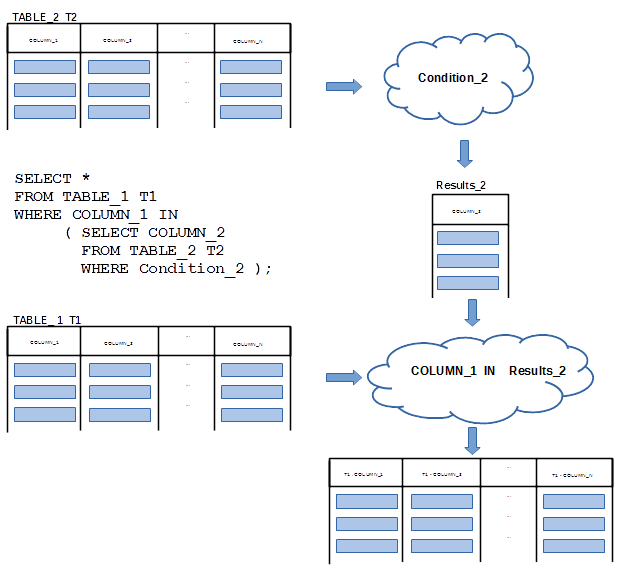
- Nested query is a query with another query embedded in WHERE or SELECT or FROM clauses
Nested queries
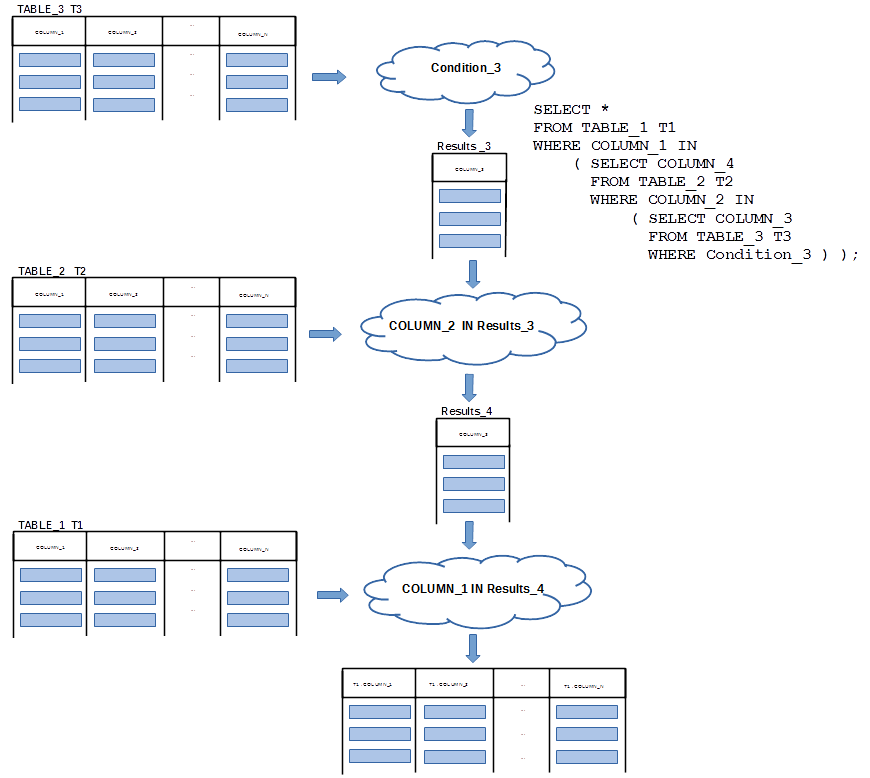
- Nested query is a query with another query embedded in WHERE or SELECT or FROM clauses
Nested queries
- Sample database
CREATE TABLE DEPARTMENT(
 name               VARCHAR(50)        NOT NULL,
 code               CHAR(5)            NOT NULL,
 total_staff_number DECIMAL(2)         NOT NULL,
 chair              VARCHAR(50)            NULL,
 budget             DECIMAL(9,1)       NOT NULL,
  CONSTRAINT dept_pkey PRIMARY KEY(name),
  CONSTRAINT dept_ckey1 UNIQUE(code),
  CONSTRAINT dept_ckey2 UNIQUE(chair),
  CONSTRAINT dept_check1 CHECK (total_staff_number BETWEEN 1 AND 50) );
CREATE TABLE COURSE(
 cnum               CHAR(7)           NOT NULL,
 title              VARCHAR(200)      NOT NULL,
 credits            DECIMAL(2)        NOT NULL,
 offered_by         VARCHAR(50)           NULL,
  CONSTRAINT course_pkey PRIMARY KEY(cnum),
  CONSTRAINT course_check1 CHECK (credits IN (6, 12)),
  CONSTRAINT course_fkey1 FOREIGN KEY(offered_by)
                        REFERENCES DEPARTMENT(name) ON DELETE CASCADE );
Nested queries
- A class of nested queries is based on a concept of inline views
- Inline views can be used to reduce the complexity of query implementation
- An inner query is created first and its outcomes are used as a relational table (inline view) in an outer query
- For example, a query find the titles of courses offered by a department chaired by Peter is decomposed into the following two queries:
- Q1: Find a department chaired by Peter
- Q2: Find the titles of courses offered by a department found in Q1
- A query Q1 is implemented first and then it is used in WHERE clause of query Q2
Nested queries
- In nested queries SELECT statements are nested to theoretically unlimited level in WHERE clause
SELECT title
FROM COURSE
WHERE offered_by IN ( SELECT name
                      FROM DEPARTMENT
                      WHERE chair = 'Peter' );
Nested queries
- Implementation of a query find the titles of courses offered by a department chaired by Peter consists of the following steps
- Create a inner query as inline view Q
( SELECT name
FROM DEPARTMENT
WHERE chair = 'Peter' ) Q
SELECT title
FROM COURSE
WHERE offered_by IN Q.name
SELECT title
FROM COURSE
WHERE offered_by IN ( SELECT name
                      FROM DEPARTMENT
                      WHERE chair = 'Peter' );
Nested queries
- Another example, find the chairs of all departments, that offer 12 credit point courses
- Create an inner query as inline view Q
( SELECT offered_by
FROM COURSE
WHERE credits = 12) Q;
SELECT chair
FROM DEPARTMENT
WHERE name IN Q.offered_by
SELECT chair
FROM DEPARTMENT
WHERE name IN ( SELECT offered_by
                FROM COURSE
                WHERE credits = 12 );
Nested queries
- A query find the chairs of all departments that offer no courses is an example of ANTIJOIN operation
- It is equivalent to a query find all rows in a relational table DEPARTMENT that cannot be joined with any row in a relational table COURSE
- An inner query is implemented as an inline view finds all departments, that offer at least one course
( SELECT offered_by
FROM COURSE ) Q;
SELECT chair
FROM DEPARTMENT
WHERE name NOT IN Q.offered_by
Nested queries
- Finally, we replace a reference to an inline view Q with the inline view itself
SELECT chair
FROM DEPARTMENT
WHERE name NOT IN ( SELECT offered_by
                    FROM COURSE );
SELECT statement (5)
Outline
Correlated nested queries
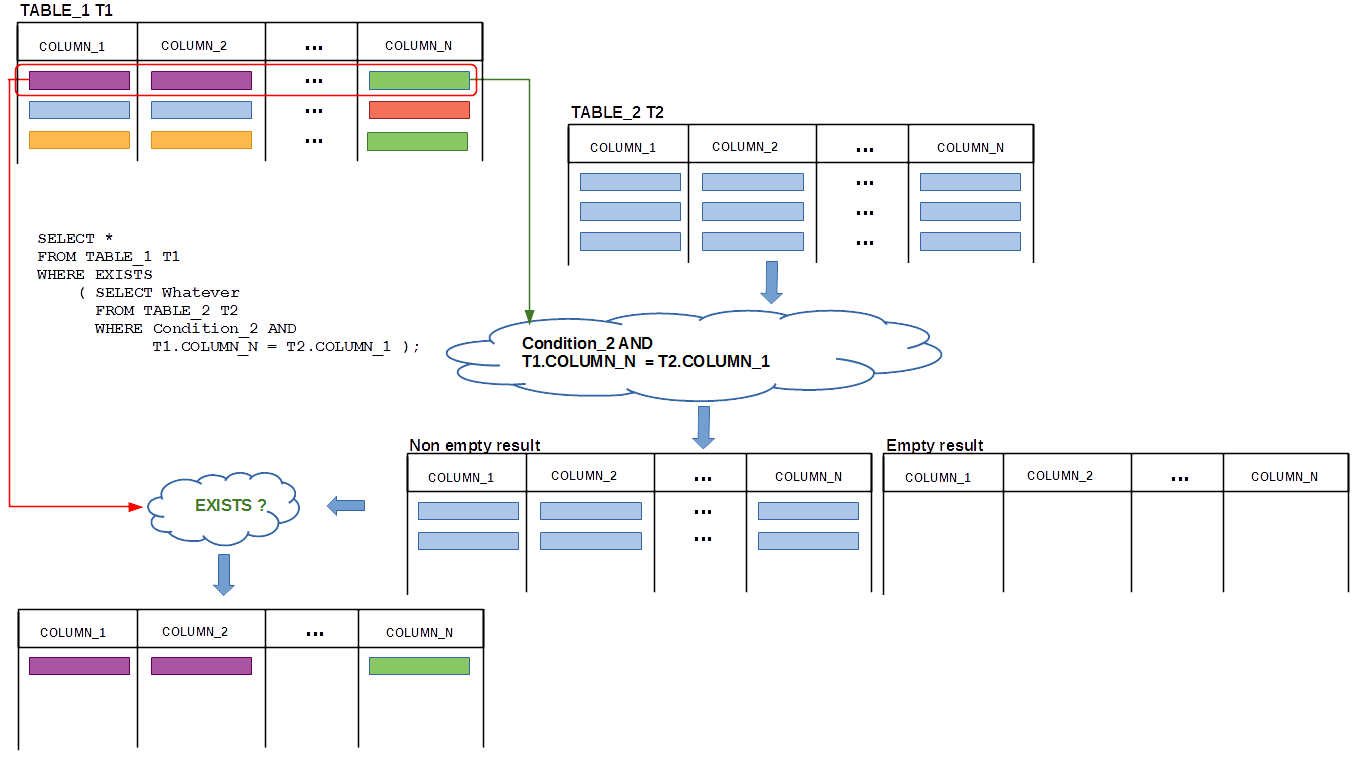
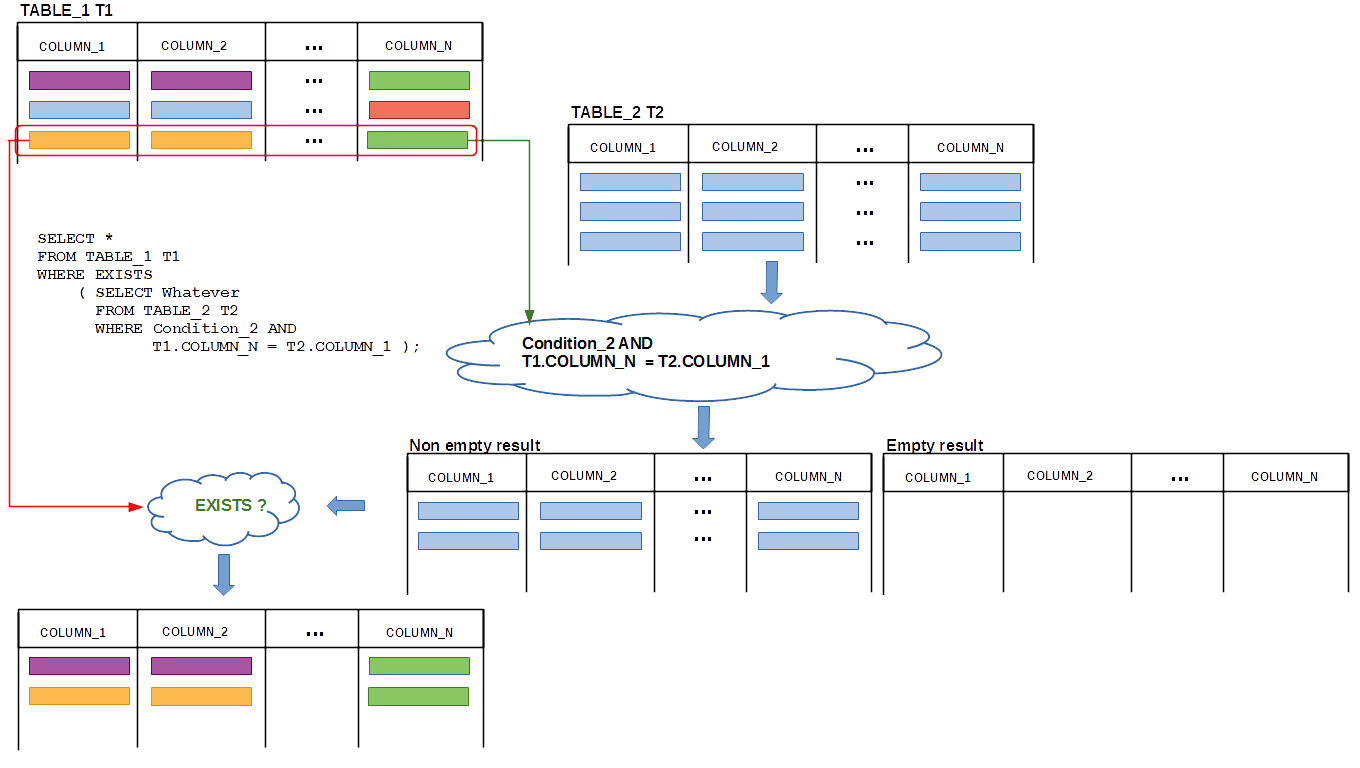
- In a correlated nested query an inline view may reference the names of relational tables used in SELECT statements outer to the inline view
Correlated nested queries
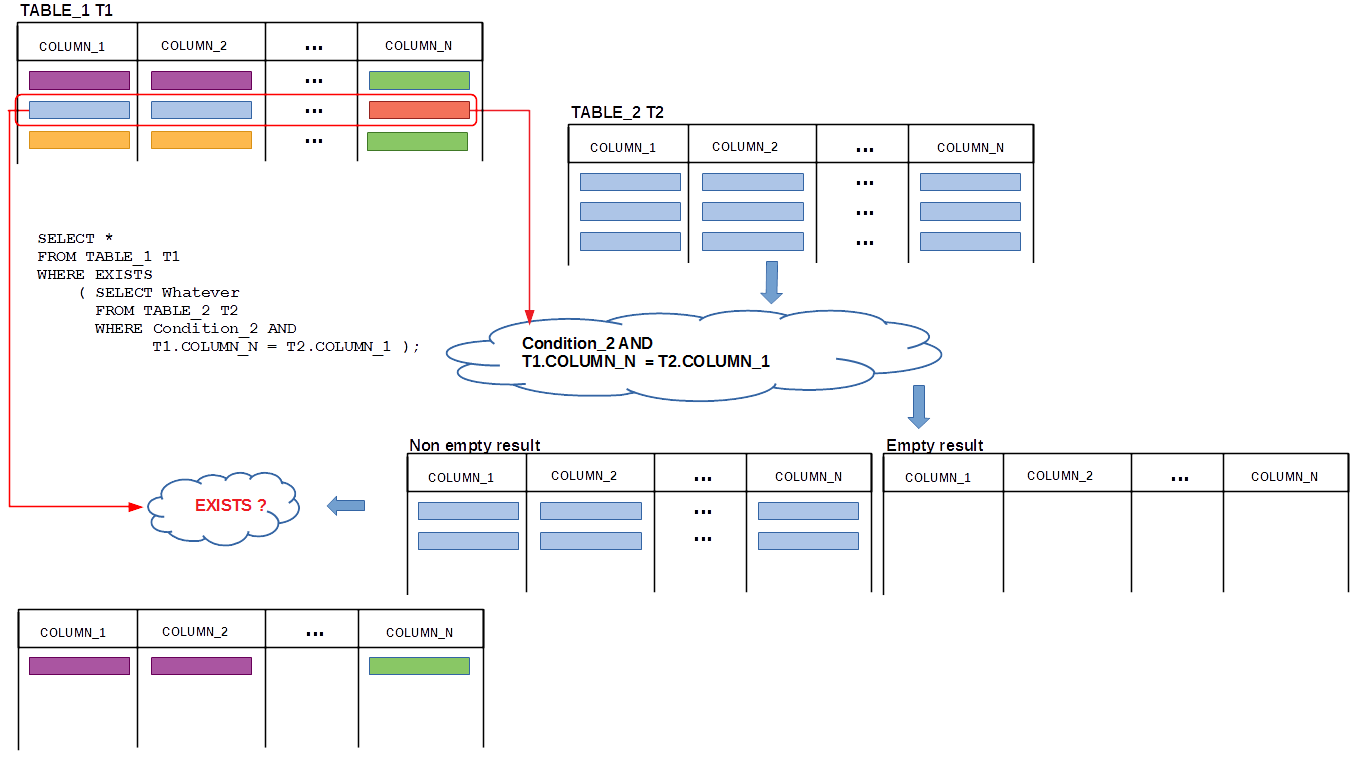
- In a correlated nested query an inline view may reference the names of relational tables used in SELECT statemens outer to the inline view
Correlated nested queries
- In a correlated nested query an inline view may reference the names of relational tables used in SELECT statements outer to the inline view
Correlated nested queries
- For example, consider a query, that finds the chairs of departments, that offer 12 credit point courses
- Such query can be expressed as an equivalent query, that finds the chairs of departments, such that there exists at least one course worth 12 credit points offered by a department we are looking for
- An inner query ... course worth 12 credit points offered by a department we are looking for is implemented as the following inline view Q
( SELECT *
FROM COURSE
WHERE credits = 12 AND offered_by = DEPARTMENT.name ) Q
SELECT chair
FROM DEPARTMENT
WHERE EXISTS Q
Correlated nested queries
- Finally, we replace a reference to an inline view Q with the inline view itself
SELECT chair
FROM DEPARTMENT
WHERE EXISTS ( SELECT *
               FROM COURSE
               WHERE credits = 12 AND offered_by = DEPARTMENT.name );
Correlated nested queries
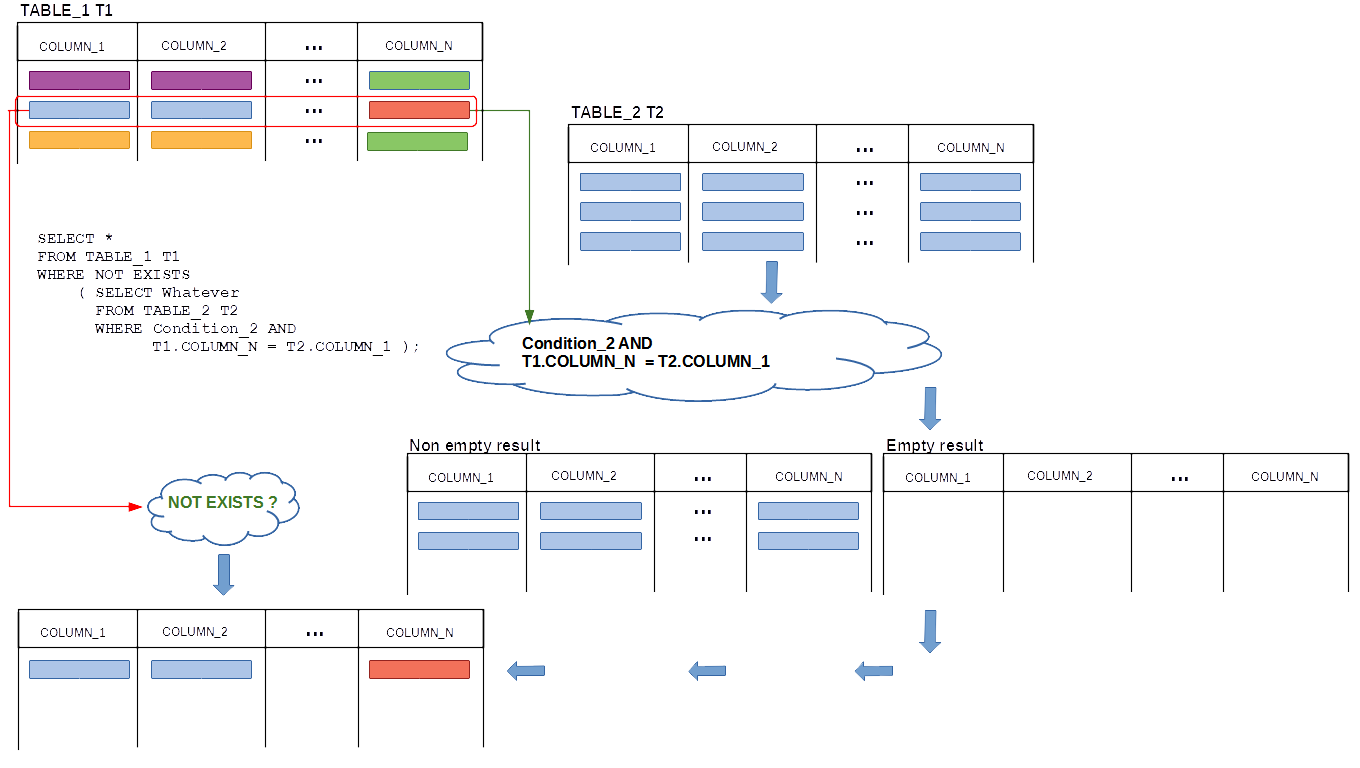
- In a correlated nested query an inline view may reference the names of relational tables used in SELECT statement outer to the inline view
Correlated nested queries
- Another example where inline view references a name of relational table used in SELECT statement outer to the inline view is the following
- Find the chairs of all departments, that offer no courses
- It is equivalent to a query find the chairs of departments, such that does not exist a course offered by a department we are looking for
- An inner query finds ... a course offered by a department we are looking for and it is implemented as an inline view Q
( SELECT *
FROM COURSE
WHERE offered_by = DEPARTMENT.name ) Q;
SELECT chair
FROM DEPARTMENT
WHERE NOT EXISTS Q
Correlated nested queries
- Finally, we replace a reference to an inline view Q with the inline view itself
SELECT chair
FROM DEPARTMENT
WHERE NOT EXISTS( SELECT *
                  FROM COURSE
                  WHERE offered_by = DEPARTMENT.name );
References
- C. Coronel, S. Morris, A. Basta, M. Zgola, Data Management and Security, Chapters 5, 7, Cengage Compose eBook, 2018, eBook: Data Management and Security, 1st Edition
- T. Connoly, C. Begg, Database Systems, A Practical Approach to Design, Implementation, and Management, Chapter 6.3.5 Subqueries, Chapter 6.3.8 EXISTS and NOT EXISTS, Chapter 7.4.1 Creating a View Pearson Education Ltd, 2015
- D. Darmawikarta, SQL for MySQL A Beginner's Tutorial, Chapter 7 Subqueries, Chapter 9 Views, Brainy Software Inc. First Edition: June 2014
- How to ... ? Cookbook, How to implement queries in SQL ? (Part 2) Recipe 6.3 How to implement nested queries ?
- How to ... ? Cookbook, How to implement queries in SQL ? (Part 2) Recipe 6.4 Recipe 6.4 How to implement correlated nested queries ?